
Home/Industries/Food and Packaging Machinery
INDUSTRIES
Precision CNC Parts Manufacturing for Food and Packaging Machinery
Parts for food and packaging machinery require careful production in terms of hygiene, material suitability and repeatable dimensional accuracy. Memsa Havacılık offers CNC machining solutions for confectionery machine parts, food machinery parts and special machine mold parts.

01FOOD AND PACKAGING MACHINERY
Materials Used in Food Machinery
AISI 304 and 316 stainless steels and engineering plastics such as POM (acetal) are commonly used in parts that come into contact with food. In supplier documents, these materials are declared under (EC) 1935/2004, the framework regulation for food contact materials in the EU; for plastics, (EU) 10/2011 is also referenced, and (EC) 2023/2006 for good manufacturing practice.
The suitability of each food contact part depends on the raw material group and conditions of use. The need for a material declaration of compliance and, if necessary, certificates should therefore be clarified with the customer before the order.
APPLICATIONS
- Confectionery machine parts
- Food processing machine parts
- Packaging machine parts
- Special machine mold parts
- Gear, shaft and bushing parts
- Spare and replacement parts
02CAPABILITIES
Our Production Approach for This Industry
01
Stainless Steel and POM Machining
Working with materials common in food machinery, such as 304 and 316 stainless steel and POM.
02
Spare Part Production
Recurring production of worn machine parts based on a sample or drawing.
03
Special Machine Mold Parts
3, 4 and 5-axis machining options for molds and special machine components.
04
Material Compliance Requests
Food contact declarations and certificate needs are clarified before the order.
05
Repeatable Dimensions
Consistency between batches is targeted with a validated program and inspection plan.
02
Part Groups for Confectionery and Packaging Machinery
In confectionery, food processing and packaging machinery, forming, filling, cutting and conveying elements rely on parts such as gears, shafts, bushings, cams, plates and special fixtures. Since some of these parts wear under continuous operation, they are requested repeatedly as spare parts.
Special parts and spare parts belonging to machine manufacturers’ own designs can be produced from a technical drawing or sample. Whether the part comes into contact with food is important in terms of material and surface expectations.
03
Special Machine Molds and Mold Parts
In special machine and mold parts, geometric accuracy, surface quality and repeatability directly affect the operating precision of the machine. For mold and special machine parts, 3-axis, 4-axis and, when necessary, 5-axis machining is evaluated according to the part geometry.
When several units of the same part are required, consistency between batches is targeted with a validated program and inspection plan. Fixture-based production can be considered depending on batch size.
04
Hygiene and Surface Expectations
In food machinery, burrs, sharp edges and surface roughness are important for cleanability. Surface expectations and deburring requirements should be specified on the technical drawing.
When necessary, a material certificate and a food contact declaration of compliance can be requested; these documents are obtained from the raw material supplier. Which document is required depends on the machine manufacturer’s specification.
03MATERIALS
Materials We Machine
- AISI 304 stainless steel
- AISI 316 / 316L stainless steel
- Aluminum alloys
- Engineering plastics (PA, HDPE, etc.)
- Alloy and tool steels
04FAQ
Frequently Asked Questions
Contact us with your technical drawing, material and quantity; we will get back to you with an answer specific to your project.
Which materials are used in food machinery parts?
For parts in contact with food, 304 and 316 stainless steels and food-grade plastics such as POM are commonly preferred. The exact material is determined according to the machine manufacturer’s requirements.
Can a food contact compliance document be provided?
The declaration of compliance is usually obtained from the raw material supplier. If necessary, the document request is clarified before the order.
Can a confectionery machine spare part be produced from a sample?
Yes. The sample can be measured and modeled, and a technical drawing can be prepared for production; the material type is clarified with the customer.
05OTHER INDUSTRIES
Other Industries We Serve
01 / 04
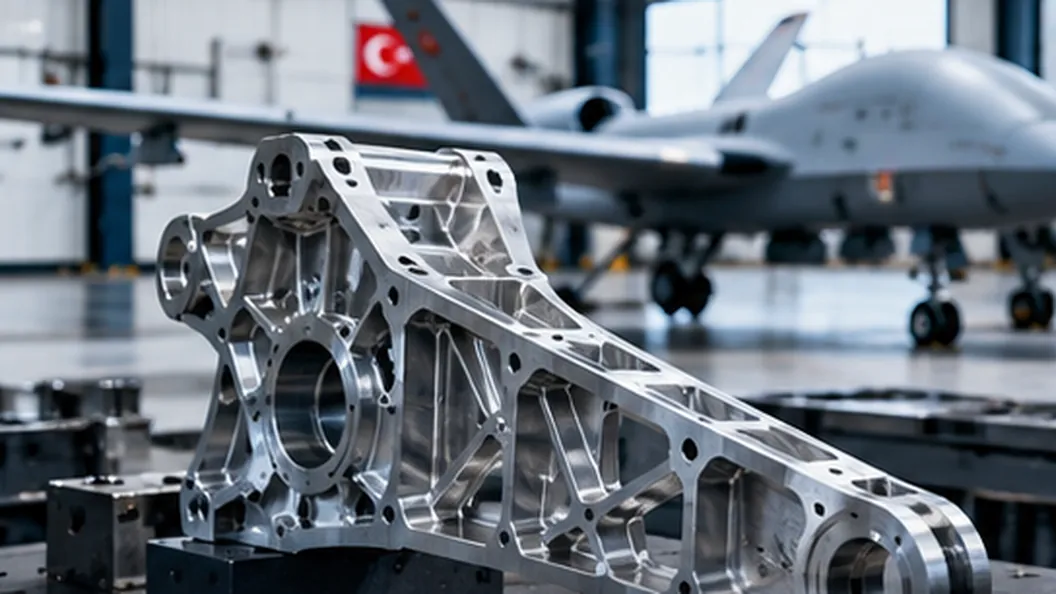
Defense and Aerospace
Precision CNC manufacturing of defense and aerospace parts with high traceability and documentation requirements.
EXPLORE

02 / 04
Automotive
Repeatable precision CNC manufacturing of fixtures, jigs, prototypes and series production parts for automotive suppliers.
EXPLORE

03 / 04
Medical
CNC machining of medical device parts and fixtures from materials such as titanium, stainless steel and PEEK.
EXPLORE
04 / 04
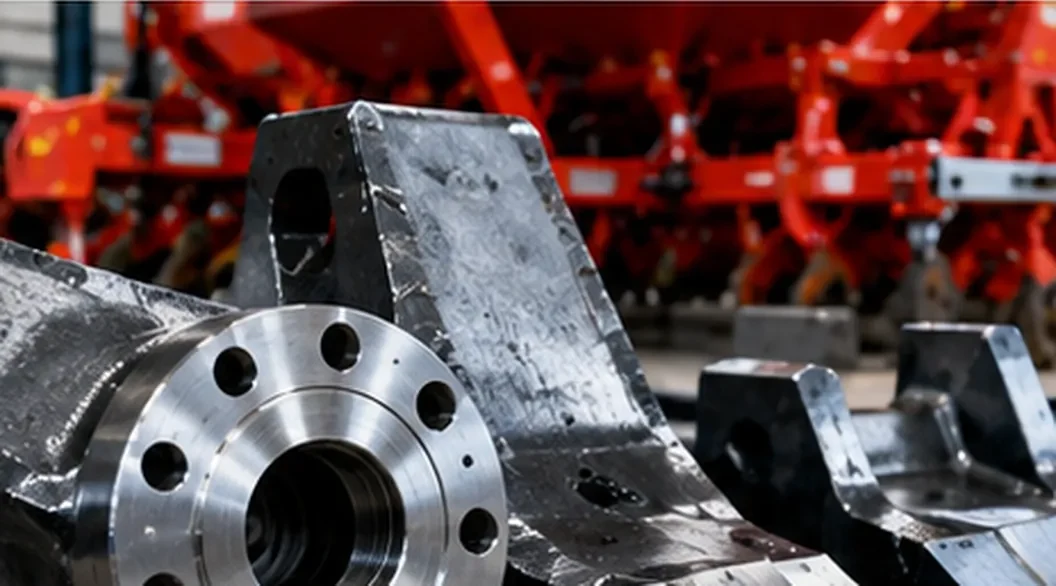
Agricultural Machinery
Machining of wear and replacement spare parts for agricultural machinery, including potato harvesters.
EXPLORE
Get a Quote for Your Project
Share the technical drawing or a sample of your food and packaging machinery parts and let us prepare a quote.