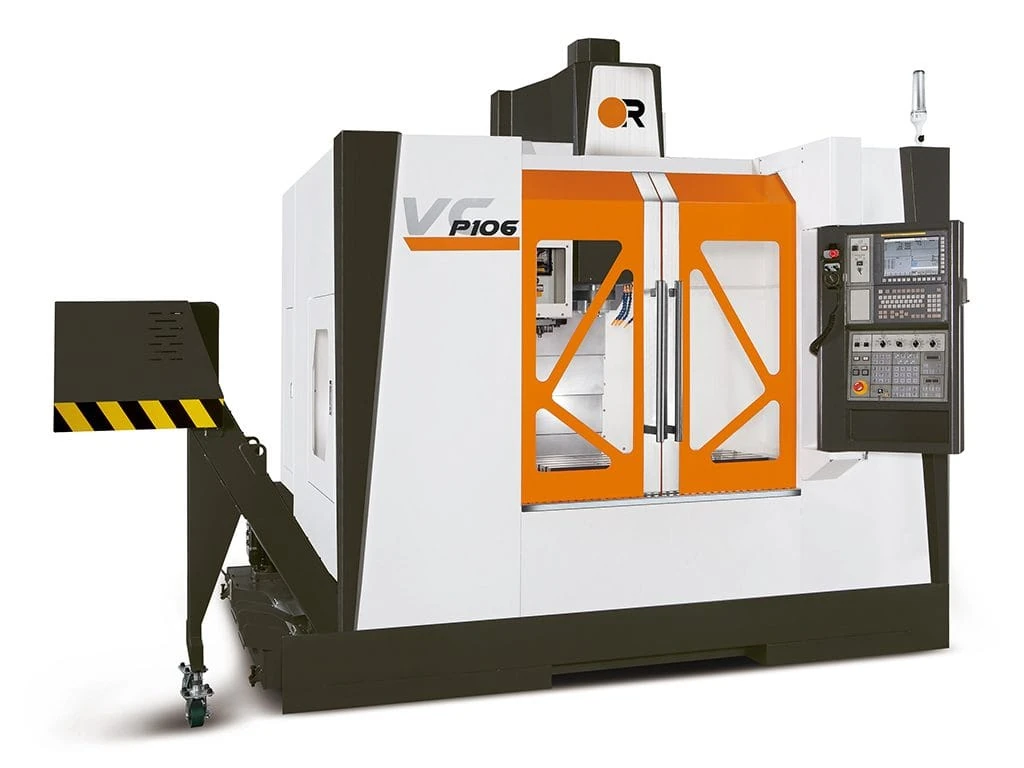
This page summarizes the 3, 4 and 5-axis CNC machining centers in our machine park, which parts each axis configuration suits and the advantages it offers.
In 3-axis centers the cutting tool moves linearly along the X, Y and Z axes while the tool orientation stays fixed. They are suited to milling prismatic parts such as plates, blocks, flanges, brackets and housings, and to pocketing, slotting, drilling and tapping operations.
Advantages include simple programming, a widely available machine structure and economical cost. Parts with several faces to machine require re-fixturing, so the fixturing plan matters.
APPLICATIONS
Plates, blocks and flanges (3-axis)
Shafts, rollers and cylindrical housings (4-axis)
Complex structural parts and mold surfaces (5-axis)
03CAPABILITIES
Capabilities of Our Machine Park
01
3-Axis
Economical, repeatable machining for prismatic parts.
02
4-Axis
Single-setup machining of cylindrical and multi-face parts.
03
5-Axis
Fewer setups for complex geometry and compound angles.
04
3+2 and Simultaneous Options
Positional machining for prismatic work, simultaneous 5-axis for contoured surfaces.
05
Choosing the Right Machine
The right axis configuration is chosen based on part geometry, tolerance and quantity.
02
4-Axis CNC Machining Centers
In a 4-axis configuration, an A axis that rotates the part around the X axis is added to the X, Y and Z axes. It suits shafts, rollers, cylindrical housings, cam profiles and parts with holes or keyways around their circumference.
Machining several faces of a part in a single setup reduces datum shift. There are indexed (3+1) and continuous (simultaneous) modes; continuous surfaces such as helixes and cams require simultaneous machining.
03
5-Axis CNC Machining Centers
5-axis centers add two rotary axes, enabling 3+2 (positional) or simultaneous 5-axis machining. They suit parts with complex geometry, compound angles and contoured surfaces, and are widely used in defense and aerospace, medical and mold work.
Advantages include fewer setups, approaching the surface at the right tool angle and using shorter tools. Programming and collision checking require more detailed preparation than 3-axis work.
04
Choosing the Right Axis Configuration and Machine Data
More axes do not mean a better result for every part; the choice depends on geometry, tolerance, quantity and cost. When you share your technical drawing, we evaluate the right configuration together.
The make, model and machining area of our machines are listed in the Machine Lineup section at the top of this page. This information helps you assess whether your part fits the machine.
3-axis suits prismatic parts, 4-axis suits cylindrical and multi-face parts, and 5-axis suits complex parts with compound angles. The final decision is based on the technical drawing.
What is the difference between 3+2 and simultaneous 5-axis?
In 3+2, the two rotary axes position and lock the part and cutting is done with three axes. In simultaneous 5-axis, all axes move together during cutting.
Where can I find machine capacities?
Make, model, number of axes and machining area are listed in the Machine Lineup section on this page.
Get a Quote for Your Project
Share your technical drawing so we can determine the right machine and axis configuration for your part together.