Home/CNC Machining/5-Axis CNC Machining
OUR SERVICES
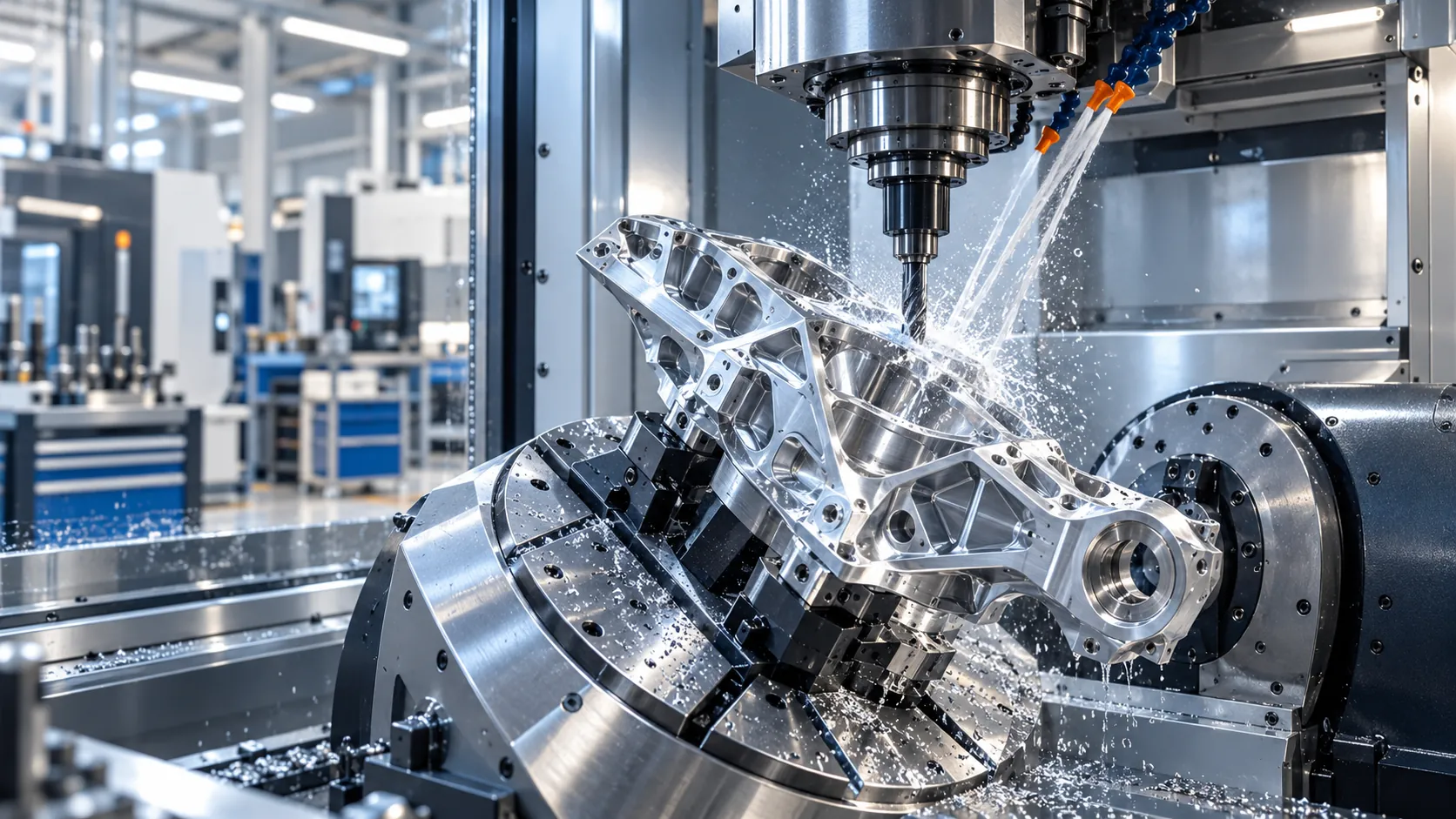
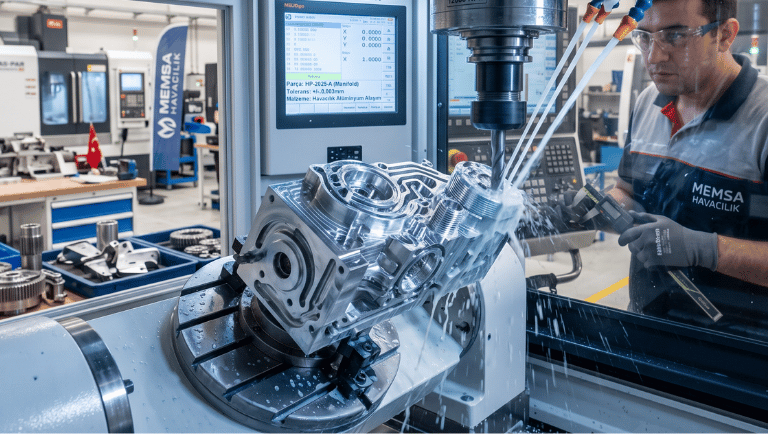
With 5-axis CNC machining technology, we offer solutions for the high-precision production of metal parts with complex geometries. Adding two rotary axes to the three linear axes allows many faces of the part to be machined with fewer setups and the right tool orientation.
015-AXIS CNC MACHINING
In addition to the X, Y and Z linear axes, 5-axis machines have two rotary axes (e.g. A and B or A and C). This structure allows the cutting tool or the part to be tilted to different angles and gives access to multiple surfaces in a single setup.
Parts with complex surfaces, compound angles and deep geometries benefit most from this structure. Programming and collision checking require more detailed preparation than 3-axis work.
APPLICATIONS
02ADVANTAGES
01
Access to multiple faces in one setup reduces datum shift and preparation time.
02
The right tool orientation for compound angles, undercuts and curved surfaces.
03
3+2 for prismatic work, simultaneous 5-axis for contoured surfaces.
04
Bringing the tool close to the surface supports the use of short tools and better surface quality.
05
The advantage of fewer setups for consistent dimensions on parts made of titanium and superalloys.
02
In 3+2 machining, the two rotary axes bring the part to a set position and lock it; cutting is then done with 3-axis strategies. This method is generally suited to planar and prismatic geometries, reduces the number of setups when machining several faces from different angles and can help with the use of shorter, more rigid tools.
In simultaneous 5-axis machining, all five axes move together during cutting and the tool keeps the right orientation relative to the surface throughout the operation. Fully simultaneous machining requires machine features such as tool center point control (RTCP/TCPC); this method is preferred especially for continuously curved and complex contoured surfaces.
03
Machining several faces in a single setup reduces the datum shift that can occur each time the part is removed and re-clamped, and makes it easier to hold positional tolerances between surfaces. Approaching the surface at a better tool angle also enables the use of shorter tools and improved surface quality.
How much of these advantages pays off economically depends on the part; for a simple prismatic part, 5-axis may be an unnecessary cost. For this reason, 3, 4 and 5-axis options are evaluated together according to part geometry and quantity.
04
Parts with complex geometry are common in defense and aerospace structural components, medical device parts, mold and composite tooling work and special machine components. In difficult-to-machine materials such as titanium and nickel-based alloys, surface integrity and dimensional consistency through fewer setups are important.
We can evaluate together whether 5-axis is needed based on the geometry and tolerances in your drawing. Where it is not needed, a more economical 3 or 4-axis alternative is recommended.
03MATERIALS
04PROCESS
01
The technical drawing, 3D model, material, tolerance and quantity are reviewed; manufacturability and potential risks are clarified at the quotation stage.
02
The machining strategy, toolpath and fixturing method suited to the part are defined; fixtures are designed when required.
03
The part is machined in the planned sequence on 3, 4 or 5-axis machines; critical dimensions are monitored during production.
04
Dimensions on the drawing are inspected, the requested documents are prepared and the parts are shipped according to the agreed delivery plan.
05FAQ
Contact us with your technical drawing, material and quantity; we will get back to you with an answer specific to your project.
In 3+2, the two rotary axes position and lock the part and cutting is done with 3-axis strategies. In simultaneous 5-axis, all axes move together during cutting.
No. Simple prismatic parts can be produced economically on 3 axes, and cylindrical/multi-face parts on 4 axes. 5-axis adds value in cases such as compound angles, undercuts or continuously curved surfaces.
Approaching the surface at the right tool angle and being able to use shorter tools can help reduce vibration and tool marks. The result depends on the part, material and cutting parameters.
06OTHER SERVICES
01 / 04
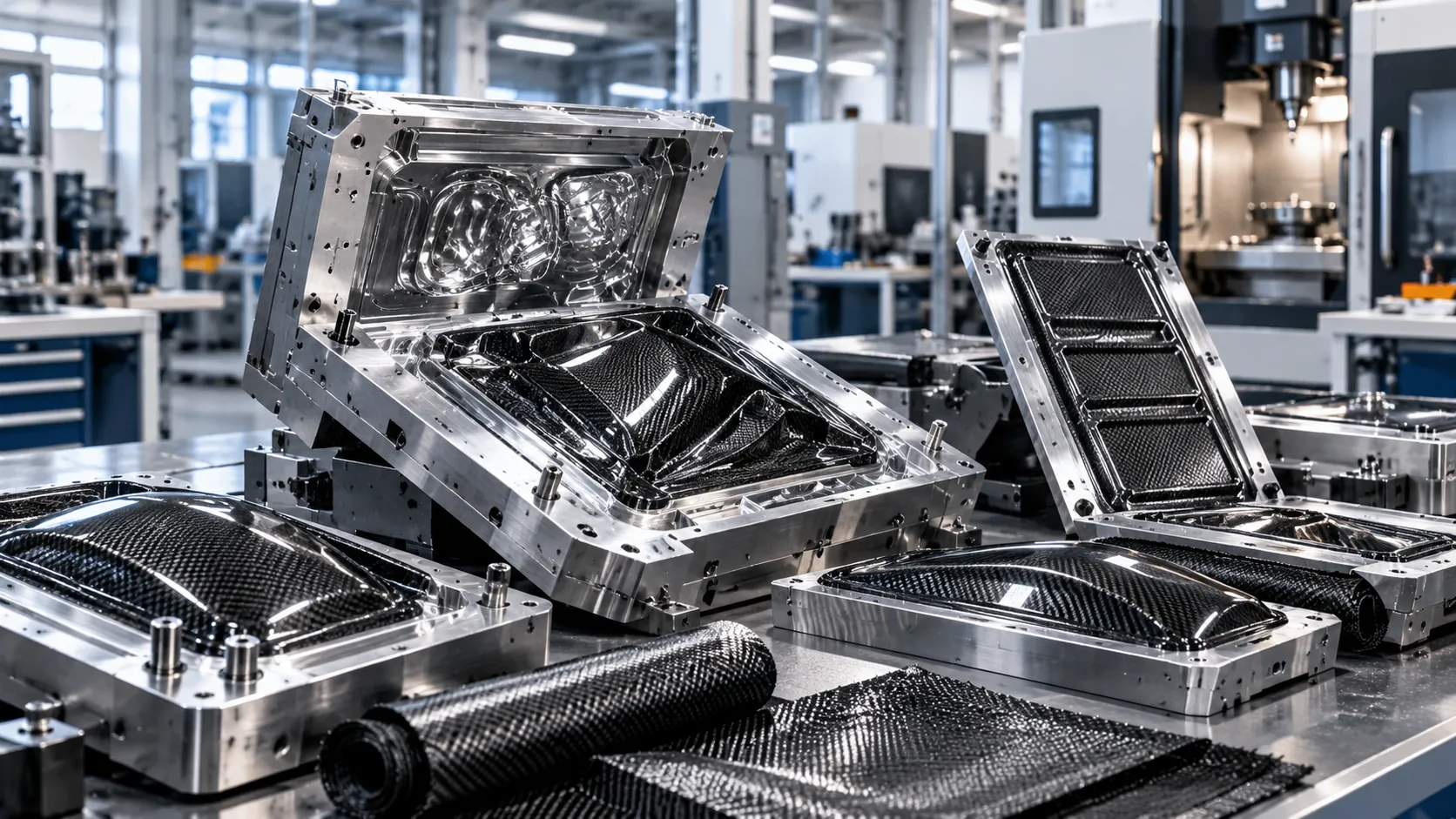
Layup tool, mold and pattern machining solutions for carbon fiber and composite part production.
EXPLORE

02 / 04
Efficient, repeatable 3-axis machining for prismatic parts, plates, flanges and mold components.
EXPLORE
03 / 04
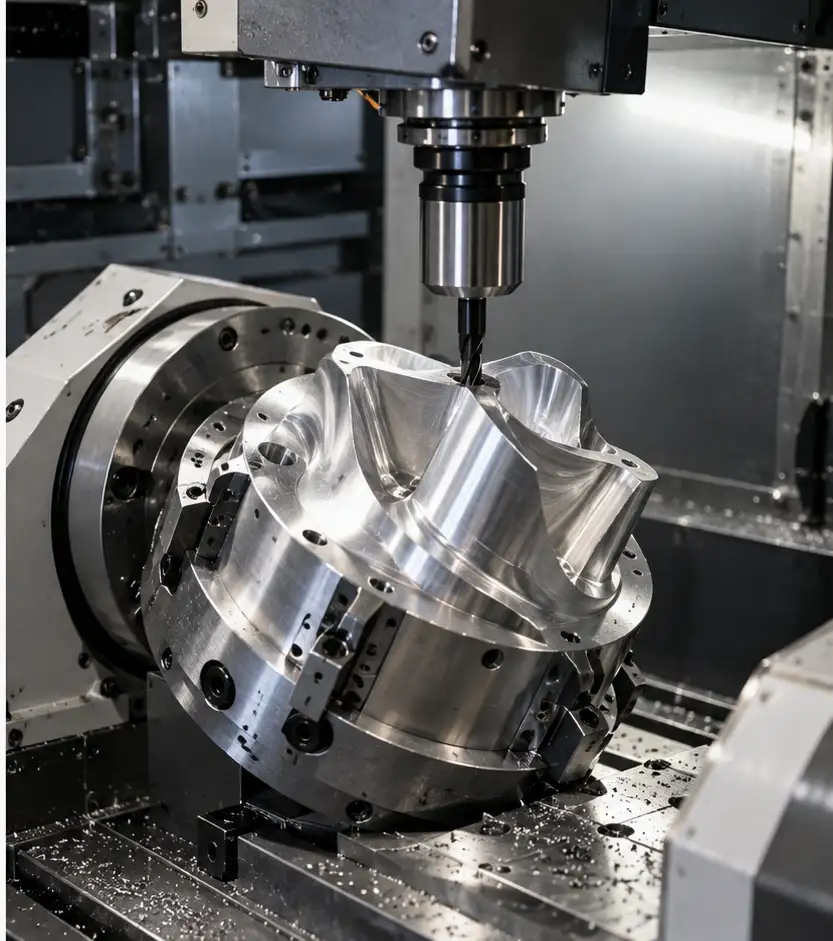
Single-setup machining of cylindrical and multi-face parts thanks to the rotary axis; keyways, holes and helical features.
EXPLORE
04 / 04
Drawing-compliant production for parts that require tight tolerances, surface quality and measurement verification.
EXPLORE
Send us the technical drawing and 3D model of your complex part and let us evaluate the 5-axis machining plan together.