Home/Industries/Defense and Aerospace
INDUSTRIES
Precision CNC Parts Manufacturing for Defense and Aerospace
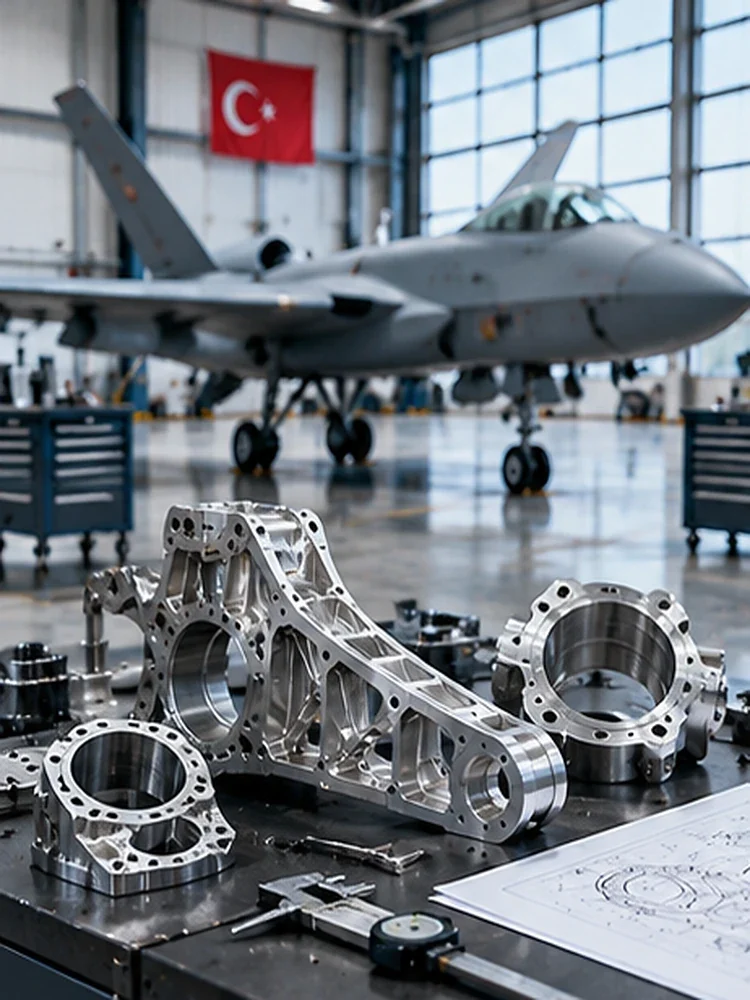
In defense and aerospace, parts must meet lightweight, strength, surface and traceability requirements all at once. Memsa Havacılık offers precision machining solutions for defense industry CNC manufacturing and aerospace parts manufacturing.
01DEFENSE AND AEROSPACE
Material Selection for Aerospace and Defense Parts
High-strength aluminum alloys such as 7075 and 2024 were developed for aircraft structural components and are used in parts where a high strength-to-weight ratio is important. Ti-6Al-4V titanium alloy is described as offering strength close to steel while being about 40% lighter, and is used in highly stressed components such as engines and landing gear.
Nickel-based superalloys such as Inconel 718 are used in jet engines and high-temperature components. These materials and stainless steels such as 17-4 PH require care in machining strategy due to high cutting forces, heat and tool wear.
APPLICATIONS
- Structural brackets
- Body and housing parts
- Connection and assembly components
- Flanges and adapters
- Prototype and pre-series parts
- Spare and maintenance parts
02CAPABILITIES
Our Production Approach for This Industry
01
Machining Aerospace Alloys
Material-appropriate machining strategies for aluminum, titanium and nickel-based alloys.
02
5-Axis Option
Machining complex structural parts with fewer setups.
03
Documentation-Driven Process
FAI, material certificate and traceability requirements are clarified before the order.
04
From Prototype to Series
Progressing from development parts to recurring batches with the same drawing revision.
05
Drawing-Based Quality
The production and inspection plan is prepared according to the dimensions and tolerances on the drawing.
02
Quality System and Documentation Expectations
In the aviation, space and defense sector, suppliers are generally expected to have industry quality management systems such as AS9100. AS9100 is a standard developed by the IAQG and based on ISO 9001; it includes additional requirements such as risk management, configuration management, traceability, counterfeit part prevention and supply chain oversight.
In NATO-based defense projects, quality assurance requirements such as AQAP-2110 may be referenced; this document also adds defense-specific requirements on the basis of ISO 9001. Which system is required is determined by the buyer for each project.
03
First Article Inspection (FAI) and Traceability
Aerospace suppliers are frequently asked for a first article inspection in AS9102 format. This report consists of three forms: part identification, materials and special processes, and the measurement results of the characteristics on the numbered (ballooned) drawing.
Requirements such as material certificates and lot traceability are also specified in the purchase contract. These expectations are clarified before production and the process is planned accordingly.
04
Typical Parts and Production Approach
Brackets, housings, fasteners, flanges and structural parts are common machining groups in defense and aerospace. 3, 4 or 5-axis machining is selected according to the part geometry to balance the number of setups and dimensional consistency.
Recurring series work can be planned as well as prototypes and low-volume parts. For these jobs, the aim is to produce with the same method by validating the CAM program, fixturing and inspection plan.
03MATERIALS
Materials We Machine
- Aluminum 7075 and 2024
- Titanium Ti-6Al-4V
- Nickel-based superalloys such as Inconel 718
- 17-4 PH stainless steel
- Alloy steels
04FAQ
Frequently Asked Questions
Contact us with your technical drawing, material and quantity; we will get back to you with an answer specific to your project.
Is AS9100 required for aerospace parts?
Aviation, space and defense buyers frequently require AS9100 certification from their suppliers; however, the requirement varies by project and buyer. The buyer’s quality requirements should be confirmed before the order.
Why is titanium considered difficult to machine?
Ti-6Al-4V has low thermal conductivity, so heat builds up in the cutting zone and tool wear accelerates. Cutting speed, coolant and tool selection are therefore planned specifically.
Can prototype parts be produced?
Yes. Production is planned for prototype and pre-series parts; lead time and cost are shared after reviewing the technical drawing.
05OTHER INDUSTRIES
Other Industries We Serve

01 / 04
Automotive
Repeatable precision CNC manufacturing of fixtures, jigs, prototypes and series production parts for automotive suppliers.
EXPLORE

02 / 04
Medical
CNC machining of medical device parts and fixtures from materials such as titanium, stainless steel and PEEK.
EXPLORE
03 / 04
Agricultural Machinery
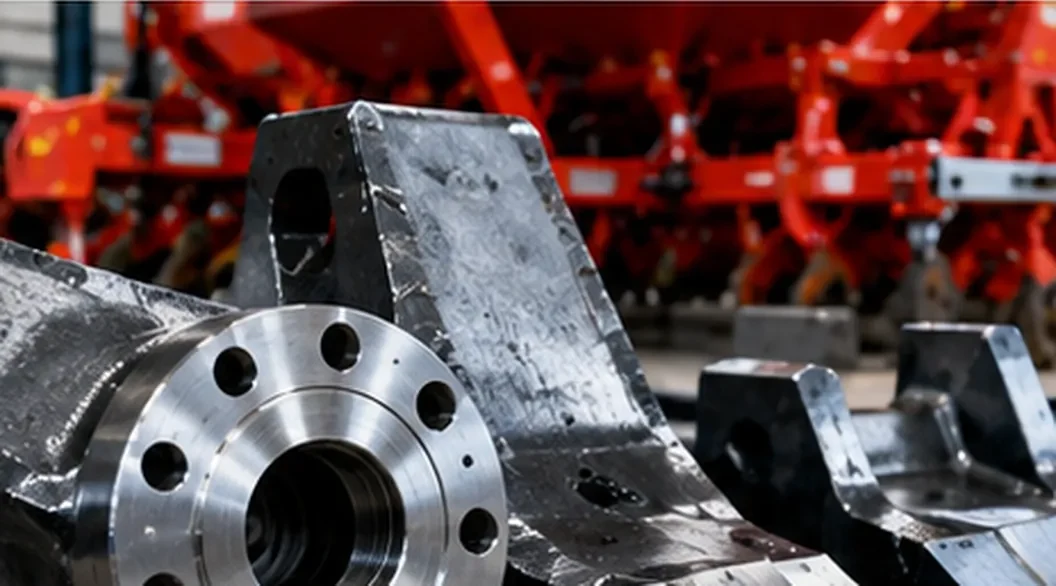
Machining of wear and replacement spare parts for agricultural machinery, including potato harvesters.
EXPLORE

04 / 04
Food and Packaging Machinery
Material-compliant CNC manufacturing of parts for confectionery machines, food machinery and special machine molds.
EXPLORE
Get a Quote for Your Project
Share the technical drawing and documentation requirements for your defense and aerospace parts and let us start the quotation process.