
Home/CNC Machining/Composite and Carbon Fiber Mold Manufacturing
OUR SERVICES
Composite Mold Manufacturing: Carbon Fiber Molds and Layup Tools
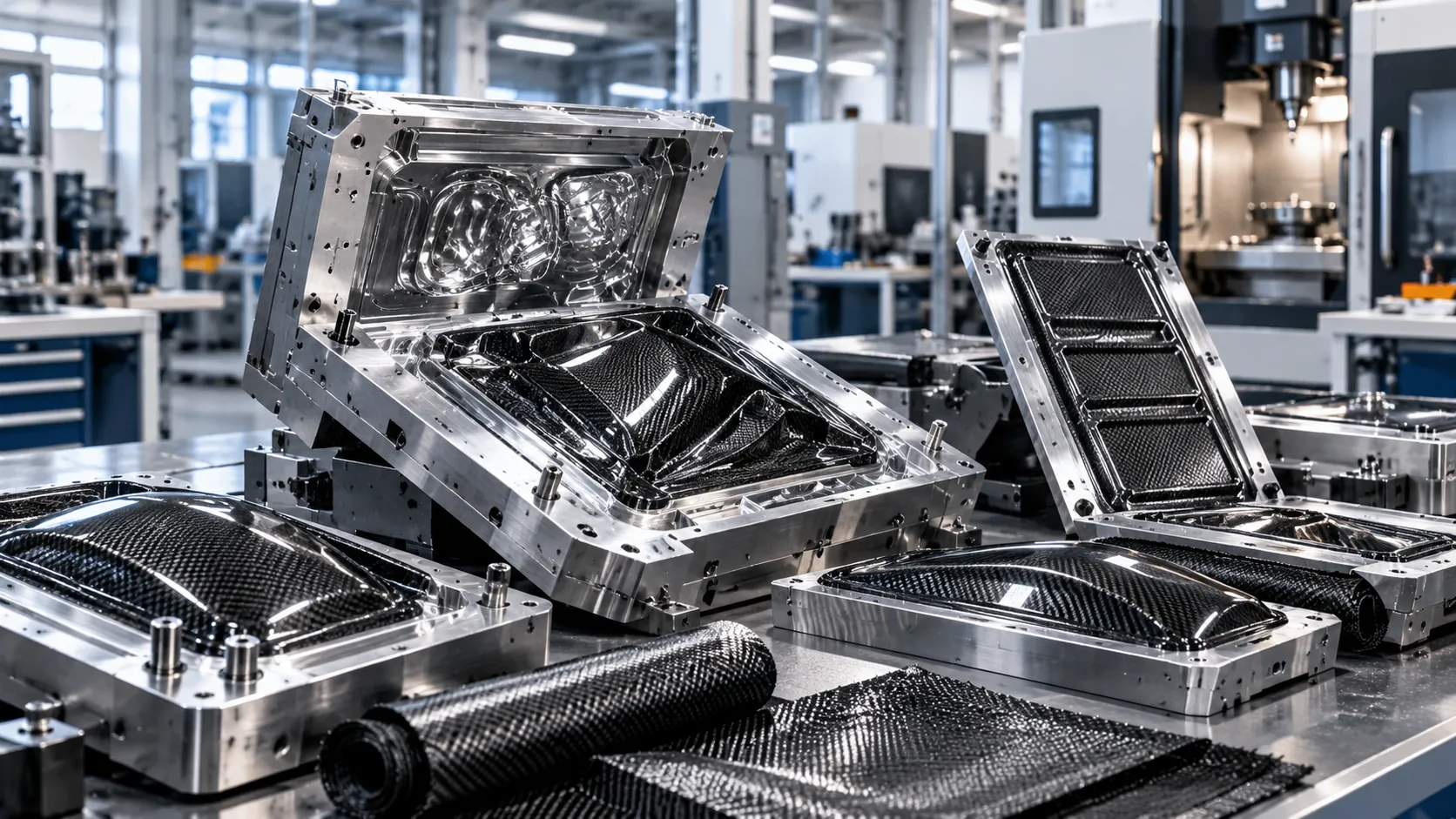
Composite mold manufacturing covers the CNC machining of layup tools and mold surfaces used to produce carbon fiber and similar composite parts. The mold material and surface accuracy directly affect the dimensional and surface quality of the composite part.
01COMPOSITE AND CARBON FIBER MOLD MANUFACTURING
What Are Layup Tools and Carbon Fiber Molds?
A layup tool is the mold surface on which prepreg or dry fiber plies are laid up and shaped. After curing, the composite part takes on the geometry and surface quality of this surface.
Because the tool determines the dimensional accuracy of the part, its surface profile and dimensional stability under temperature are important. The mold material is therefore selected according to the curing temperature of the part and the production quantity.
APPLICATIONS
- Carbon fiber part molds
- Layup tool and pattern surfaces
- Prepreg and autoclave molds
- Prototype composite part molds
- Composite part trimming and inspection fixtures
02ADVANTAGES
Advantages of This Method
01
Freeform Surface Machining
A simultaneous 5-axis machining approach for continuously curved mold surfaces.
02
Material Selection Support
Evaluation of Invar, metal or composite mold materials according to curing temperature and quantity.
03
Prototype Mold Solutions
Machining of patterns and prototype molds from epoxy or polyurethane-based boards.
04
Planning Focused on Thermal Expansion
Matching the expansion of mold and part is at the heart of planning for dimensional accuracy.
05
Easy Modification and Revision
Composite and board-based tools can be re-machined and modified throughout their service life.
02
Mold Materials and Selection Criteria
Invar (an iron-nickel alloy with about 36% nickel) has a coefficient of thermal expansion of about 1.2 ppm/°C, far lower than steel, and is used for large carbon fiber molds in the aerospace sector. According to sources, its drawbacks are high cost, weight and long lead times.
Aluminum and steel are low-cost and easy to machine; however, their thermal expansion coefficients, which are high compared to composites, can cause dimensional deviation in large parts at high curing temperatures. Epoxy and BMI-based composite tooling materials offer expansion close to that of the composite part, can be machined after curing and are much lighter than Invar; however, they are generally not as durable as metal.
Epoxy and polyurethane-based tooling boards are easy to CNC machine for patterns, prototype molds and low-volume production tools; however, their thermal expansion is high and their temperature limits vary by product (e.g. some epoxy boards are designed for curing at about 121°C). The right material is determined according to the customer’s curing temperature, tolerance and quantity.
03
Machining Composite Molds with 5-Axis CNC
Mold surfaces usually consist of continuously curved forms. On such freeform surfaces, simultaneous 5-axis machining keeps the tool oriented relative to the surface, which can contribute to surface quality and fewer setups.
In mold machining, material is first removed by roughing, and the surface profile is then created with fine finishing passes. Subsequent steps before layup, such as surface preparation, polishing or coating, are clarified separately according to the mold type.
04
From Prototype Molds to Series Production Tools
During product development, the design is validated by producing patterns or prototype molds from lightweight, easy-to-machine board materials. Later, more durable materials such as Invar, steel or composite tooling can be used for series production.
Which mold material is suitable depends on part size, curing temperature, expected service life and tolerance requirements. This choice is made by reviewing the technical drawing and production plan together.
03MATERIALS
Materials We Machine
- Invar (iron-nickel alloy)
- Aluminum alloys
- Carbon/epoxy and BMI-based composite tooling materials
- Epoxy-based tooling boards
- Polyurethane-based tooling boards
04PROCESS
Our Process from Drawing to Delivery
01
Technical Analysis
The technical drawing, 3D model, material, tolerance and quantity are reviewed; manufacturability and potential risks are clarified at the quotation stage.
02
CAM Programming
The machining strategy, toolpath and fixturing method suited to the part are defined; fixtures are designed when required.
03
CNC Production
The part is machined in the planned sequence on 3, 4 or 5-axis machines; critical dimensions are monitored during production.
04
Quality and Delivery
Dimensions on the drawing are inspected, the requested documents are prepared and the parts are shipped according to the agreed delivery plan.
05FAQ
Frequently Asked Questions
Contact us with your technical drawing, material and quantity; we will get back to you with an answer specific to your project.
Which material should be selected for a layup tool?
The choice depends on curing temperature, part size, tolerance and quantity. Low-expansion Invar or composite tooling may suit high temperatures and tight tolerances, while tooling boards may suit prototypes and low temperatures.
Can an aluminum mold be used for carbon fiber?
Aluminum is an easy-to-machine and economical material, but its expansion is high compared to composites. The risk of dimensional deviation should therefore be considered for large, tight-tolerance parts cured at high temperatures.
What temperatures can tooling boards withstand?
It varies by product. Some epoxy boards are designed for curing at about 121°C, while some polyurethane types are used in the range of about 93–150°C. Exact values should be verified from the manufacturer’s technical data sheet.
Which files are needed for a composite mold?
The 3D surface model of the part (STEP, etc.), curing temperature and method, expected quantity and tolerance information are sufficient for a quote.
06OTHER SERVICES
Our Other Services

01 / 04
3-Axis CNC Machining
Efficient, repeatable 3-axis machining for prismatic parts, plates, flanges and mold components.
EXPLORE
02 / 04
4-Axis CNC Machining
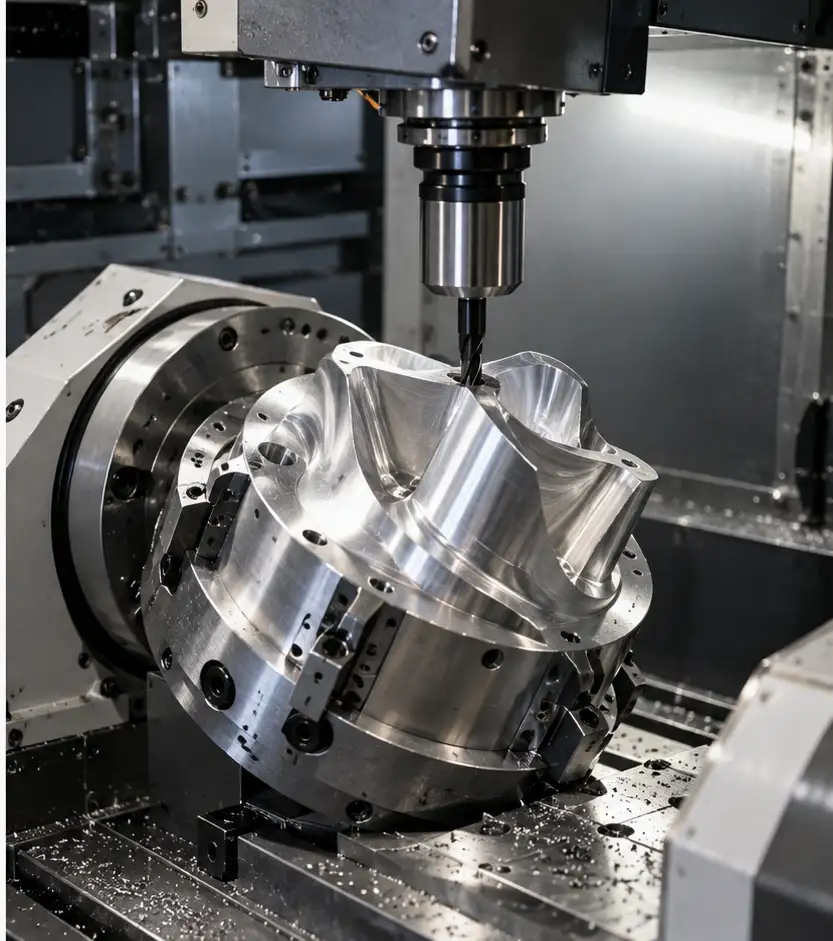
Single-setup machining of cylindrical and multi-face parts thanks to the rotary axis; keyways, holes and helical features.
EXPLORE
03 / 04
5-Axis CNC Machining
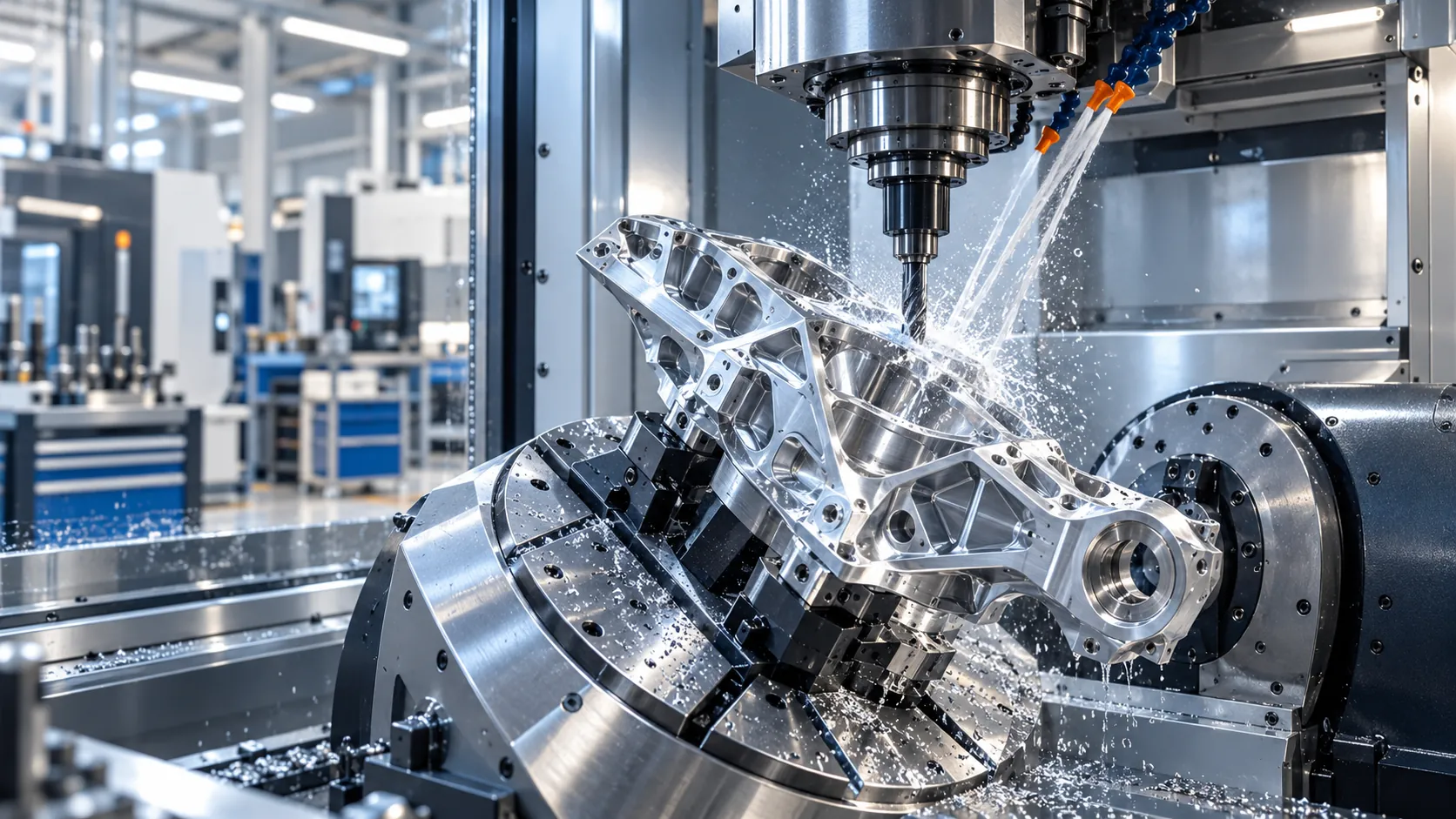
3+2 and simultaneous 5-axis machining of complex metal parts with fewer setups and high precision.
EXPLORE
04 / 04
Precision Parts Manufacturing
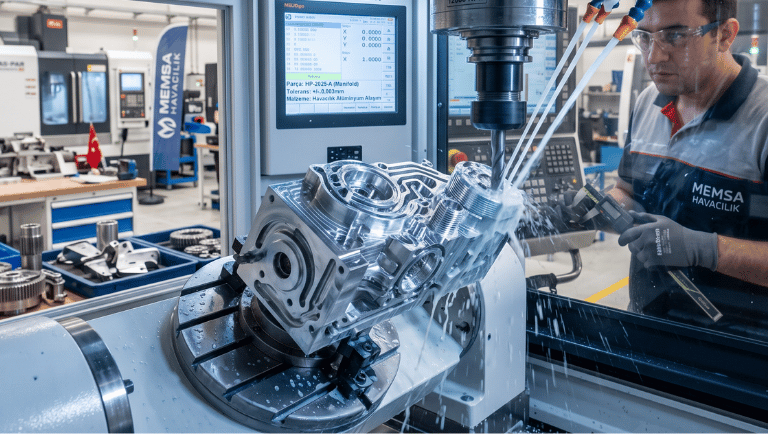
Drawing-compliant production for parts that require tight tolerances, surface quality and measurement verification.
EXPLORE
Get a Quote for Your Project
Share the 3D model and curing details for your composite part mold and let us prepare the mold machining plan together.